



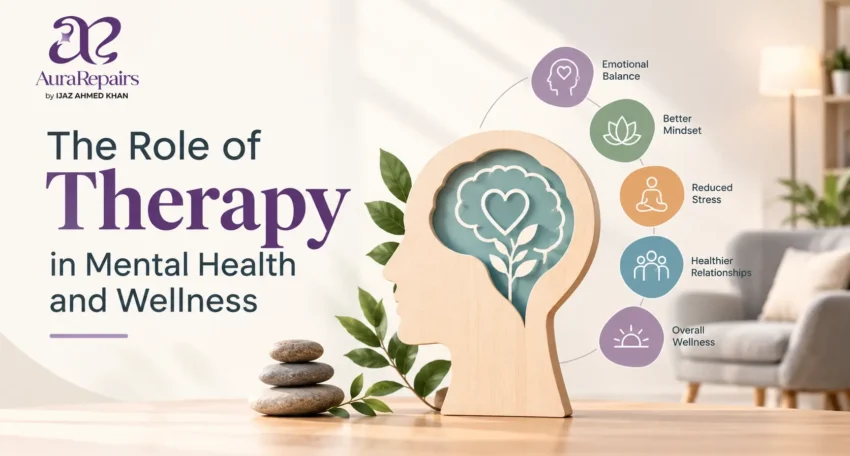
Mental health is an important part of overall well-being. Yet, many people continue to overlook their emotional and psychological needs until stress, anxiety, burnout, or emotional difficulties begin affecting everyday life.
Therapy can provide a safe space to understand emotions, identify unhealthy patterns, manage difficult experiences, and develop healthier ways of coping. For people interested in holistic wellness, therapy may also be considered alongside complementary practices such as aura healing, energy healing, spiritual guidance, and aura repair.
At Aura Repairs, the approach focuses on emotional balance, inner awareness, spiritual guidance, and energy-focused wellness. Services include Aura Diagnostic & Mapping, Chronic Stress & Burnout Repair, chakra healing, aura cleansing, energy healing, and remote healing sessions.
What Is Mental Health Wellness?
Mental health wellness is more than simply being free from mental illness. It includes developing emotional awareness, managing everyday stress, maintaining healthy relationships, handling challenges, and finding a sense of purpose and balance.
Everyone experiences difficult emotions from time to time. Feeling worried, overwhelmed, frustrated, sad, or mentally exhausted does not automatically mean something is seriously wrong. However, when these feelings become persistent or begin interfering with daily life, professional support can be valuable.
Mental health wellness involves learning how to recognize what you are experiencing and finding healthy ways to respond.
What Role Does Therapy Play in Mental Health?
Therapy gives individuals an opportunity to talk openly with a trained professional in a confidential and supportive environment.
Depending on the type of therapy and the person’s needs, therapy can help with:
Therapy is not about simply telling someone what to do. Instead, it can help people better understand themselves and develop practical tools for navigating life’s challenges.
Therapy and Emotional Awareness
Many people become so accustomed to stress that they stop recognizing how strongly it affects them.
For example, someone may constantly feel tired, irritated, worried, disconnected, or overwhelmed without understanding the cause of those feelings.
Therapy can encourage greater self-awareness by helping individuals explore their thoughts, emotions, behaviours, relationships, and experiences.
This increased awareness can be an important first step toward making positive changes.
Can Therapy Help With Stress and Burnout?
Chronic stress can affect both emotional and physical well-being. When stress continues for an extended period, a person may experience exhaustion, difficulty concentrating, sleep problems, irritability, or reduced motivation.
Therapy can help individuals understand the sources of stress and develop healthier ways of responding to them.
Aura Repairs also offers a Chronic Stress & “Burnout” Repair service as part of its energy-focused wellness approach. The service describes chronic stress as both physical and energetic strain and focuses on restoring a sense of balance and calm.
For individuals exploring holistic wellness, practices such as aura repair or spiritual guidance may be used as complementary approaches alongside appropriate professional care.
What Is Aura Healing?
Aura healing is a spiritual and holistic practice based on the idea of an energy field surrounding a person.
It is important to understand that the aura is a spiritual concept rather than a scientifically established physical structure. Aura healing should therefore be understood as a complementary or spiritual wellness practice rather than a medical treatment.
At Aura Repairs, aura healing is presented as a way to support inner balance, emotional well-being, energy awareness, and personal harmony.
People interested in spiritual wellness may explore aura healing as part of their self-care journey.
What Is Aura Repair?
Aura Repair refers to the energy-focused approach offered by Aura Repairs to help individuals explore perceived energetic imbalances.
According to Aura Repairs, its process begins with Aura Diagnostic & Mapping, followed by targeted energy-focused practices and boundary reinforcement.
From a holistic perspective, aura repair may be viewed as an opportunity for reflection, relaxation, spiritual guidance, and greater awareness of one’s emotional state.
However, aura repair should not be presented as a substitute for diagnosis or treatment from a qualified healthcare or mental health professional.
Aura Healing and Therapy: What’s the Difference?
Therapy and aura healing approach wellness from different perspectives.
Traditional therapy generally focuses on psychological, emotional, behavioural, and interpersonal patterns. A licensed mental-health professional may use established therapeutic approaches to help people address concerns such as anxiety, depression, trauma, stress, or relationship difficulties.
Aura healing, on the other hand, is a spiritual or complementary practice centred around concepts such as energy, aura, chakras, and energetic balance.
Aura Repair itself describes the distinction by positioning traditional therapy around the mind and behavioural patterns while positioning Aura Repair around the energetic field.
Because they serve different purposes, some people may choose to explore complementary spiritual practices while continuing appropriate professional mental-health care.
The Role of Aura Healing in a Holistic Wellness Routine
A holistic approach considers different aspects of a person’s well-being rather than focusing on just one area.
Depending on individual preferences, a wellness routine may include:
- Professional mental-health support
- Regular physical activity
- Healthy sleep habits
- Mindfulness or meditation
- Supportive relationships
- Stress-management techniques
- Spiritual reflection
- Energy-focused practices
- Aura cleansing or aura healing
Aura Repairs offers several energy-focused services, including Aura Cleansing & Repair, Chakra Healing & Alignment, Energy Healing, and Remote/Online Healing Sessions.
These practices can be incorporated into a personal wellness routine when approached as complementary practices rather than replacements for evidence-based healthcare.
How Aura Diagnostic and Mapping Fits Into the Aura Repair Approach
Aura Repair describes aura Diagnostic & Mapping as its foundational service. The website presents it as an energetic assessment designed to identify perceived imbalances before creating an individualized approach.
For someone interested in aura-based wellness, this may provide a structured starting point for exploring their spiritual and energetic experiences.
It is important, however, to distinguish an aura assessment from a medical or psychological diagnosis. An aura reading cannot replace assessment by a qualified doctor, psychologist, psychiatrist, or other healthcare professional.
Therapy, Spiritual Guidance, and Personal Growth
Personal growth can involve understanding both our inner experiences and the circumstances around us.
Therapy may help people examine thoughts, emotions, behaviours, relationships, and past experiences. Spiritual guidance may help individuals reflect on personal meaning, values, purpose, and their relationship with spirituality.
For people who connect with energy-based practices, aura healing and aura repair may become another part of their personal wellness routine.
The key is to choose approaches appropriate to your individual needs and to seek professional healthcare support when symptoms warrant it.
Signs That You May Benefit From Professional Mental-Health Support
Everyone experiences difficult periods, but some situations deserve additional attention.
Consider speaking with a qualified mental-health professional if you experience:
- Persistent sadness or hopelessness
- Ongoing anxiety or excessive worry
- Severe or prolonged stress
- Difficulty managing everyday responsibilities
- Major changes in sleep or appetite
- Loss of interest in activities
- Social withdrawal
- Persistent emotional distress
- Difficulty coping with a major life event
- Thoughts of harming yourself or someone else
If you are experiencing a mental-health crisis or thoughts of self-harm, seek immediate help from local emergency services or a qualified crisis professional.
How to Build a Balanced Mental Wellness Routine
Personal growth can involve understanding both our inner experiences and the circumstances around us.
Therapy may help people examine thoughts, emotions, behaviours, relationships, and past experiences. Spiritual guidance may help individuals reflect on personal meaning, values, purpose, and their relationship with spirituality.
For people who connect with energy-based practices, aura healing and aura repair may become another part of their personal wellness routine.
The key is to choose approaches appropriate to your individual needs and to seek professional healthcare support when symptoms warrant it.
How to Build a Balanced Mental Wellness Routine
Supporting mental health does not have to involve one single solution. Small, consistent habits can contribute to overall wellness.
Practice Self-Awareness
Take time to notice your emotions, stress levels, thoughts, and physical responses.
Create Time to Rest
Constant activity can leave you mentally and emotionally exhausted. Schedule periods of genuine rest.
Maintain Healthy Connections
Talking with supportive friends, family members, or professionals can make difficult experiences easier to manage.
Move Your Body
Regular physical activity can support both physical and mental well-being.
Explore Mindfulness
Meditation, breathing exercises, journaling, and quiet reflection can help create greater awareness of your thoughts and emotions.
Consider Complementary Wellness Practices
For those interested in spiritual wellness, practices such as aura cleansing, chakra healing, energy healing, or spiritual guidance may be explored as complementary approaches.
Why a Personalized Approach Matters
Mental health is different for everyone. Two people experiencing stress may have completely different causes, experiences, and needs.
This is why personalized support can be valuable.
Aura Repairs emphasizes personalized aura healing, energy balancing, and spiritual guidance as part of its approach.
Whether someone chooses therapy, spiritual guidance, aura repair, or a combination of complementary wellness practices and professional healthcare, the approach should be based on their individual circumstances.
Final Thoughts
Therapy can play an important role in mental health wellness by helping people understand their emotions, manage challenges, develop healthier coping strategies, and improve their overall quality of life.
At the same time, people interested in holistic wellness may explore complementary practices such as aura healing, aura repair, chakra healing, energy healing, and spiritual guidance.
These approaches come from different traditions and should not be confused with one another. Professional mental-health treatment remains important when someone is experiencing significant psychological symptoms, while complementary practices may be explored as part of an individual’s broader wellness journey.
At Aura Repairs, the focus is on helping individuals explore emotional balance, inner awareness, spiritual guidance, and energetic wellness through personalized aura-focused services.
Ultimately, mental health wellness is about finding healthy and appropriate ways to care for your mind, emotions, body, and sense of inner well-being.


