



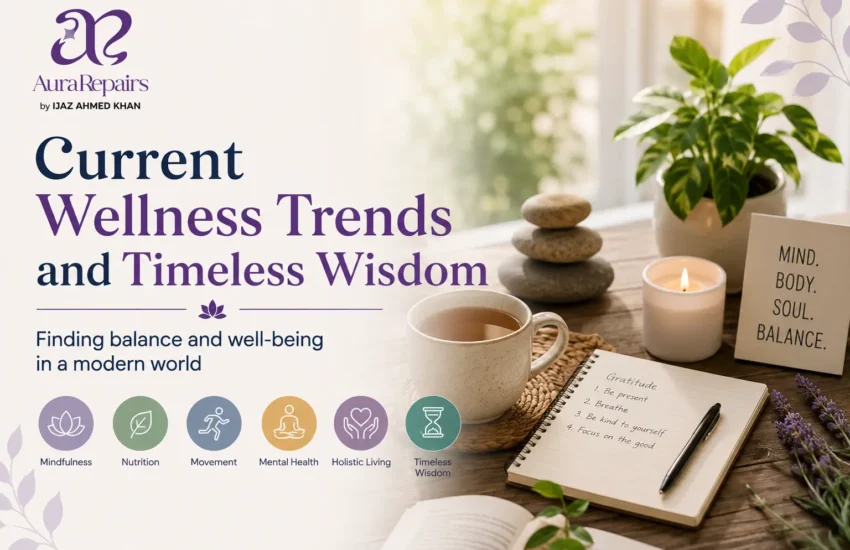
Modern life gives us more ways to improve our wellbeing than ever before. From mindfulness apps and wearable health trackers to personalized wellness plans, sleep optimization, digital detoxes, and nature-based practices, wellness trends are changing quickly.
At the same time, many of the ideas behind today’s wellness movement are not new.
People have practiced meditation, reflection, mindful breathing, connection with nature, community support, and spiritual practices for centuries. These forms of timeless wisdom continue to offer valuable lessons for anyone looking for greater balance in a busy world.
The real opportunity may not be choosing between modern wellness and traditional wisdom. It may be learning how to bring the two together.
What Are the Latest Wellness Trends?
Wellness is becoming more personalized and proactive. Current trends increasingly focus on mental wellbeing, better sleep, mindfulness, stress management, personalized health, and creating healthier daily routines.
Recent wellness research highlights strong interest in mindfulness, mental health, sleep, nutrition, fitness, and personalized wellness experiences.
Some of the most noticeable current wellness trends include:
- Mindfulness and meditation
- Mental wellness and emotional self-care
- Sleep and recovery
- Digital detox and healthier technology habits
- Personalized wellness
- Nature-based wellness
- Stress management
- Social connection and community
- Holistic approaches to wellbeing
- Personalized spiritual and self-awareness practices
These trends reflect a simple shift: people are increasingly interested in feeling well, not simply reacting when something goes wrong.
Mindfulness Is Becoming Part of Everyday Life
Mindfulness is one of the most accessible wellness practices today.
It does not necessarily require a retreat, special equipment, or hours of free time. A few minutes of quiet breathing, focused attention, meditation, or conscious observation can become part of a normal daily routine.
The growing interest in mindfulness is closely connected with the modern need for better stress management and emotional wellbeing. Research into wellness trends continues to identify mindfulness and mental wellness as important areas of consumer interest.
The timeless wisdom behind mindfulness is simple:
Slow down enough to notice what is happening within you.
Instead of constantly moving from one task to another, mindfulness encourages people to observe their thoughts, emotions, habits, and reactions.
This can help create greater self-awareness.
Simple Mindfulness Practices for Daily Life
You can start with small habits:
- Take five minutes for quiet breathing.
- Eat one meal without checking your phone.
- Spend a few minutes observing your surroundings.
- Write down your thoughts before going to sleep.
- Take a slow walk without digital distractions.
- Pause before reacting to stressful situations.
These simple practices can support a more intentional approach to everyday life.
Stress Management Is Moving Beyond Quick Fixes
Stress has become a major part of the modern wellness conversation.
Work pressure, constant notifications, financial concerns, social expectations, information overload, and limited downtime can make it difficult to switch off.
Current wellness approaches increasingly focus on managing stress through lifestyle, mindfulness, sleep, physical activity, social connection, and emotional awareness rather than relying on one solution.
The Global Wellness Institute’s current lifestyle medicine trends also highlight mental fitness, sleep, physical activity, and social connection as important parts of modern wellbeing.
But the idea of managing stress is not new.
Timeless wisdom has long encouraged periods of rest, reflection, solitude, prayer, meditation, community, and connection with nature.
The modern lesson is therefore not simply “do more wellness.”
Sometimes, it is:
Create space to do less.
Sleep and Recovery Are Becoming Wellness Priorities
For years, wellness conversations often focused on productivity and exercise. Today, recovery is receiving much more attention.
Quality sleep, rest days, relaxation, and healthy routines are increasingly viewed as essential parts of wellbeing.
Current wellness research highlights sleep and recovery as major areas of interest, while emerging sleep trends include mindful approaches to sleep and reducing the pressure to achieve “perfect” sleep.
Timeless wisdom offers a similar message: the body and mind need periods of restoration.
A balanced lifestyle cannot be built entirely around productivity.
Try creating an evening routine that encourages your mind to slow down:
- Reduce unnecessary screen time before bed.
- Keep a consistent sleep schedule.
- Create a calm sleeping environment.
- Avoid working right up until bedtime.
- Give yourself time to transition from work to rest mentally.
Small changes can make your daily routine feel less overwhelming.
Digital Wellness and the Need to Disconnect
Technology has made communication easier, but constant connectivity can also make it difficult to experience genuine quiet.
Messages, emails, social media, entertainment, and endless information can keep the mind occupied throughout the day.
That is why digital wellness and technology detox are becoming increasingly relevant.
Some people are creating phone-free periods, limiting social media use, turning off unnecessary notifications, or spending more time outdoors.
The deeper principle is timeless:
Your attention is valuable.
Where your attention goes can influence how you experience your day.
You do not need to abandon technology. Instead, create intentional boundaries around it.
For example, consider one screen-free hour each evening or leave your phone away during meals, walks, meditation, or conversations.
Personalized Wellness Is Replacing One-Size-Fits-All Advice
Another important wellness trend is personalization.
People increasingly want wellness routines that fit their lifestyle, preferences, goals, and individual circumstances. Industry research has identified personalized wellness as an important part of the evolving health and wellness market.
This makes sense because no two people experience life in the same way.
One person may feel restored by meditation. Another may benefit from walking in nature. Someone else may find value in journaling, creative activities, community, spiritual reflection, or structured relaxation.
The timeless lesson is to understand yourself before unthinkingly following a trend.
Instead of asking:
“What is everyone else doing?”
Ask:
“What genuinely helps me feel more balanced, present, and connected?”
Nature-Based Wellness Is Bringing People Back to Simplicity
Nature-based wellness is another growing area.
Forest walks, outdoor exercise, gardening, mindful time in nature, and simply spending less time indoors can provide a welcome break from digital environments.
Modern wellness may give these practices new names, but the underlying idea is ancient.
Humans have always found meaning, calm, and perspective through nature.
You do not need an expensive wellness retreat to experience this.
A short walk through a park, sitting outside in the morning, gardening, or watching a sunset can create a useful pause in a busy day.
The goal is not to turn every moment into a wellness activity.
It is simply to reconnect with the world around you.
Emotional Wellbeing Is Becoming Just as Important as Physical Wellness
Wellness is no longer viewed only through exercise and nutrition.
Emotional wellbeing, self-awareness, relationships, stress, purpose, and mental wellness are becoming increasingly important parts of the conversation.
Current wellness research shows that consumers are placing greater emphasis on mental health and emotional wellbeing, while many people are looking for personalized approaches rather than quick solutions.
This creates an important opportunity for self-reflection.
Ask yourself:
- What situations repeatedly drain my energy?
- Which relationships help me feel supported?
- When do I feel most peaceful?
- What emotions do I tend to ignore?
- Am I giving myself enough time to recover?
- What personal values guide my decisions?
There are no universal answers.
The purpose is to become more aware of your own patterns.
Timeless Wisdom for Finding Balance in Modern Life
Modern wellness trends can offer useful tools, but timeless wisdom reminds us that wellbeing is not always about adding another practice to our schedules.
Sometimes balance comes from returning to simple principles.
Practice Gratitude
Gratitude can shift attention from constant comparison toward appreciation.
You might write down three things you appreciate each evening or acknowledge something positive during your day.
Protect Meaningful Relationships
Wellbeing is not only an individual experience.
Family, friendship, community, and meaningful human connection can provide emotional support and a sense of belonging.
Social connection is also increasingly recognized within modern wellness approaches.
Know When to Slow Down
Rest is not necessarily a sign of weakness or laziness.
A sustainable lifestyle needs recovery.
Instead of waiting until you feel completely exhausted, build small periods of rest into your normal routine.
Focus on Self-Awareness
One of the most valuable forms of timeless wisdom is learning to understand yourself.
Notice your emotions.
Notice your habits.
Notice what gives you energy and what leaves you feeling drained.
This awareness can become the foundation for more intentional choices.
How to Combine Modern Wellness With Timeless Wisdom
The best approach may be neither completely modern nor completely traditional.
Instead, combine useful ideas from both.
For example:
Modern tool: Meditation app
Timeless principle: Stillness and reflection
Modern tool: Sleep tracker
Timeless principle: Respect for rest
Modern practice: Digital detox
Timeless principle: Protect your attention
Modern trend: Personalized wellness
Timeless principle: Know yourself
Modern practice: Nature-based wellness
Timeless principle: Connection with nature
Modern approach: Emotional self-care
Timeless principle: Self-awareness and reflection
This creates a more balanced philosophy of wellbeing.
Where Aura Healing and Spiritual Wellness May Fit
For people interested in spiritual wellness, aura healing, energy balancing, or personal reflection, these practices may become part of a broader wellbeing routine.
Aura Repairs focuses on aura healing, energy balancing, spiritual guidance, and inner balance, offering services such as Aura Diagnostic & Mapping, Chronic Stress & Burnout Repair, Color & Frequency Balancing, and Generational & Family Healing.
These approaches can be considered alongside healthy lifestyle habits, mindfulness, reflection, supportive relationships, and appropriate professional care.
It is important to distinguish spiritual or complementary wellness practices from medical treatment. If you are experiencing persistent physical or psychological symptoms, seeking advice from a qualified healthcare professional is important.
Finding Your Own Definition of Wellness
There is no single formula for a balanced life.
One person may find peace through meditation. Another may feel restored by nature, meaningful conversations, creative expression, prayer, exercise, or quiet reflection.
The goal is not to follow every new wellness trend.
It is to understand which practices genuinely support your life.
Modern wellness gives us new tools.
Timeless wisdom gives us perspective.
Together, they can encourage a more thoughtful approach to mental wellness, emotional wellbeing, stress management, self-care, mindfulness, and inner balance.
The most meaningful wellness routine may not be the newest one.
It may be the one that helps you slow down, understand yourself, care for your wellbeing, and live with greater intention.


