



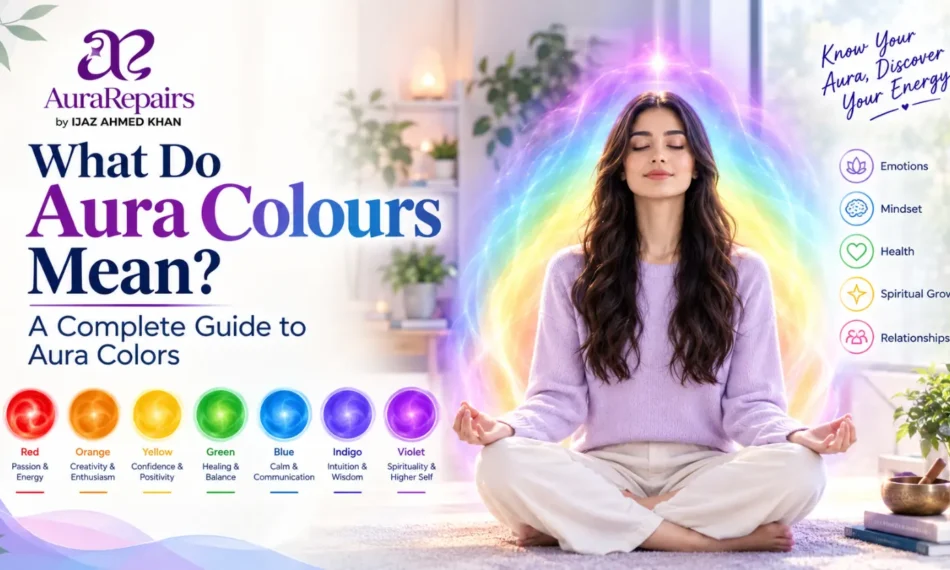
Have you ever wondered what your aura colour might say about your personality, emotions, or spiritual journey? In spiritual traditions, aura colours are believed to symbolise different aspects of a person’s energy, emotional state, and inner experience. Each colour has its own traditional interpretation, from the passion associated with red to the calmness linked with blue and the spiritual awareness often connected with violet.
Understanding aura colours can be an interesting way to explore self-awareness, mindfulness, and personal growth. Whether you are curious about the meaning of a red aura, the symbolism of a green aura, or how aura colours relate to the seven chakras, this complete guide will help you understand the most common interpretations.
Remember that aura colour meanings come from spiritual and metaphysical traditions. No established scientific evidence shows that a colored energy field surrounding the human body can be measured or used to determine someone’s personality or health.
What Do Aura Colours Mean?
Aura colours are shades that spiritual practitioners believe they can see, sense, or interpret within a person’s energetic field. Different colours are traditionally associated with qualities such as confidence, creativity, compassion, communication, intuition, and spiritual awareness.
For example, red is commonly associated with passion and vitality, yellow with Optimism and mental clarity, green with compassion and growth, and blue with calmness and communication.
In many contemporary aura-reading systems, these colours are also connected to the seven chakras, which are described in spiritual traditions as subtle energy centres within the body.
However, there is no single universal aura colour chart. Meanings can vary between practitioners, and an aura colour should not be treated as a scientific personality test, medical diagnosis, or prediction of the future.
Aura Colours Meaning Chart: What Each Colour Symbolises
The following aura colour chart summarises common spiritual interpretations of the main aura colours.
| Aura colour | Traditional spiritual meaning | Common chakra association |
|---|---|---|
| Red | Passion, courage, vitality, motivation | Root chakra |
| Orange | Creativity, enthusiasm, emotional expression | Sacral chakra |
| Yellow | Optimism, confidence, curiosity | Solar plexus chakra |
| Green | Compassion, growth, harmony | Heart chakra |
| Blue | Calmness, honesty, communication | Throat chakra |
| Indigo | Intuition, insight, introspection | Third eye chakra |
| Violet or purple | Spirituality, imagination, awareness | Crown chakra |
These are common modern interpretations rather than fixed rules. The colour someone associates with their aura may have a different meaning depending on their beliefs, experiences, and spiritual tradition.
Red Aura Meaning: Passion, Strength and Vitality
A red aura is traditionally associated with physical energy, determination, courage, and strong emotions. In aura-reading practices, red often represents a person who approaches life with enthusiasm and a willingness to take action.
What does a red aura mean?
Common interpretations of a red aura include:
- Passion: Strong enthusiasm for relationships, interests, and personal goals.
- Courage: A willingness to face challenges and make difficult decisions.
- Motivation: A practical, action-oriented approach to life.
- Grounding: A symbolic connection with stability, security, and the physical world.
Some aura traditions interpret darker or muddy shades of red as symbols of frustration or tension. These interpretations are subjective and should not be used to judge someone’s emotional or physical health.
In chakra-based practices, red commonly represents the root chakra and symbolises safety, stability, and grounding.
Orange Aura Meaning: Creativity and Emotional Expression
An orange aura is often linked with creativity, enthusiasm, sociability, and emotional expression. It symbolises movement, exploration, and the desire to experience life with curiosity.
What does an orange aura say about you?
In traditional aura symbolism, orange may represent:
- Creative thinking and artistic interests.
- Confidence in expressing ideas.
- Enthusiasm for new experiences.
- Warmth and social connection.
- A desire for emotional freedom and personal growth.
Orange is commonly associated with the sacral chakra, which is linked in spiritual traditions with creativity, pleasure, and emotional expression.
If orange’s symbolism resonates with you, consider exploring creative activities, journaling, or mindful movement to express yourself and understand your emotions.
Yellow Aura Meaning: Confidence, Optimism and Clarity
Yellow is often considered one of the brightest colours in an aura colour guide. It is traditionally associated with Optimism, curiosity, confidence, and intellectual energy.
What does a yellow aura mean spiritually?
Common interpretations of a yellow aura include:
- Optimism: Approaching everyday experiences with hope and positivity.
- Confidence: Believing in your abilities and decisions.
- Curiosity: Enjoying learning, discovery, and new ideas.
- Mental clarity: Valuing understanding, communication, and problem-solving.
Many modern chakra-based systems associate yellow with the solar plexus chakra. This chakra is symbolically connected with personal power, self-confidence, and individual identity.
Rather than treating yellow as proof of a particular personality trait, use its symbolism as a reminder to build confidence, recognise your strengths, and approach challenges with a balanced mindset.
Green Aura Meaning: Compassion, Growth and Harmony
A green aura is commonly associated with compassion, emotional balance, renewal, and connection with nature. In spiritual interpretations, green represents growth and the ability to nurture relationships.
What does a green aura mean?
Green aura symbolism often includes:
- Compassion and empathy towards others.
- A desire to support friends, family, and communities.
- Personal development and emotional growth.
- Appreciation for nature and peaceful surroundings.
- A search for balance in relationships.
In contemporary chakra teachings, green is commonly linked to the heart chakra, which symbolises Love, compassion, connection, and acceptance.
Some practitioners also associate green with healing. This is a spiritual interpretation, not evidence that someone with a green aura can diagnose or heal medical conditions.
For personal reflection, green can represent the importance of setting healthy boundaries, practising kindness, and maintaining supportive relationships.
Blue Aura Meaning: Calmness, Honesty and Communication
Blue is traditionally associated with tranquillity, sincerity, communication, and emotional steadiness. In an aura colour chart, it often symbolises the ability to express thoughts clearly and listen to others with care.
What does a blue aura represent?
A blue aura may symbolise:
- Honest and thoughtful communication.
- Calmness during challenging situations.
- A preference for peaceful environments.
- Empathy and attentive listening.
- A desire to express personal values openly.
Blue is commonly associated with the throat chakra, which represents communication and self-expression in chakra-based spiritual practices.
Blue’s symbolism can encourage you to communicate more clearly, listen without rushing to respond, and express your needs respectfully.
You can’t determine whether someone is honest, peaceful, or trustworthy simply by assigning them a particular aura colour.
Indigo Aura Meaning: Intuition and Inner Awareness
Indigo is a deep blue-purple shade traditionally associated with intuition, introspection, imagination, and inner awareness. It often appears in spiritual discussions about personal insight and reflective thinking.
What does an indigo aura mean?
Common spiritual interpretations include:
- A strong interest in self-reflection.
- Sensitivity to social situations and emotions.
- An imaginative approach to solving problems.
- Curiosity about spiritual ideas.
- A preference for quiet time and contemplation.
Indigo is commonly associated with the third eye chakra, known as Ajna in Sanskrit. In contemporary spiritual practices, this chakra symbolises intuition, perception, and insight.
You can explore these themes through meditation, reflective journaling, or quiet observation of your thoughts. Intuition can be a useful personal experience, but important decisions still benefit from evidence, careful reasoning, and practical judgement.
Violet or Purple Aura Meaning: Spirituality and Imagination
Violet and purple aura colours often represent spiritual exploration, imagination, creativity, and a search for deeper meaning.
What does a purple aura mean?
In aura-reading traditions, violet or purple may symbolise:
- Interest in Spirituality and personal development.
- Creative imagination and original ideas.
- A desire to understand life’s bigger questions.
- Reflection on values, purpose, and meaning.
- Openness to contemplative practices.
Violet is often associated with the crown chakra, which many contemporary chakra systems link to spiritual awareness and a larger sense of purpose.
A purple aura should not be interpreted as proof that someone possesses supernatural abilities or is more spiritually advanced than others. Instead, its symbolism can prompt you to explore your beliefs, creativity, and personal values.
Do Aura Colours Change Over Time?
In spiritual aura-reading traditions, aura colours are often described as changing in response to emotions, experiences, and personal development. Some practitioners see a dominant colour as a recurring theme, with other colours symbolising changing experiences.
However, no established scientific method exists for tracking changes in a person’s aura.
Your feelings, priorities, and behaviour can certainly change over time. Stressful experiences, supportive relationships, rest, and life transitions may influence how you feel and respond to situations.
Instead of interpreting a colour change as a warning or prediction, use it as an opportunity to check in with yourself. Ask what’s been happening in your life, what you need right now, and which habits support your emotional wellbeing.
How Can You Explore Your Aura Colour?
If you are interested in aura colours and spiritual self-awareness, you can explore the subject without assuming that you must see or identify a particular colour.
Consider these simple practices:
- Practise mindful breathing. Spend a few minutes noticing your breath and allowing your attention to settle.
- Reflect on your emotions. Write down how you feel and what may be influencing your mood.
- Explore colour symbolism. Notice which colours you naturally associate with confidence, calmness, creativity, or compassion.
- Spend time in nature. Walking outdoors can help you slow down and reconnect with your surroundings.
- Journal about personal growth. Consider the qualities you want to develop, such as patience, courage, or clearer communication.
- Approach aura readings thoughtfully. Treat them as spiritual or reflective experiences, not definitive assessments of your character or health.
You do not need to see an aura to practise mindfulness or benefit from self-reflection. If you enjoy spiritual wellness practices, choose ones that feel meaningful, safe, and aligned with your values.
Aura Colours and the Seven Chakras
Aura colours are frequently discussed alongside the seven-chakra system. In contemporary chakra-based practices, each chakra is associated with a particular colour and symbolic theme.
- Root chakra — Red: Grounding, stability, and security.
- Sacral chakra — Orange: Creativity, pleasure, and emotional expression.
- Solar plexus chakra — Yellow: Confidence, willpower, and personal identity.
- Heart chakra — Green: Compassion, Love, and connection.
- Throat chakra — Blue: Communication, truth, and expression.
- Third eye chakra — Indigo: Intuition, insight, and perception.
- Crown chakra — Violet: Spiritual awareness, reflection, and purpose.
These associations are common in modern spiritual and wellness materials, but interpretations can vary across traditions. Chakras are part of spiritual belief systems and should not be confused with scientifically established anatomical structures.
Final Thoughts: Understanding the Meaning of Aura Colours
So, what do aura colours mean? In spiritual traditions, they offer a symbolic way to explore qualities like passion, creativity, confidence, compassion, communication, intuition, and spiritual awareness.
Red often represents vitality, orange creativity, yellow Optimism, green compassion, blue calmness, indigo intuition, and violet spiritual exploration.
Ultimately, aura colour meanings are best approached as tools for reflection rather than fixed truths about who you are. No colour can define your entire personality, predict your future, or diagnose your health.
To deepen your self-understanding, pair the ideas that resonate with you with practical habits like mindfulness, journaling, healthy communication, and self-awareness. Spiritual exploration can be personally meaningful without replacing evidence-based support when you need it.


