



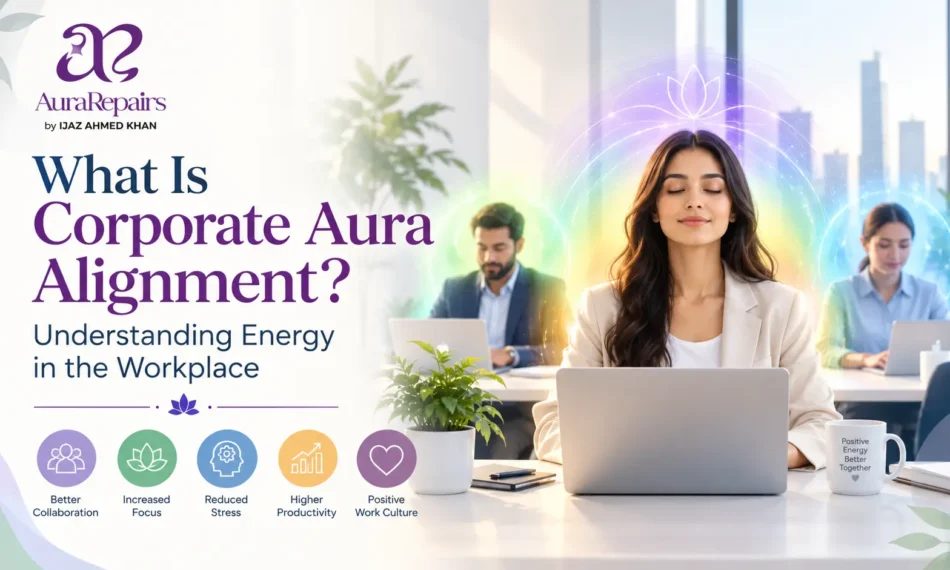
Modern workplaces are more than offices, desks, meetings, and technology. They are environments where people interact, communicate, make decisions, solve problems, and manage everyday pressures. As a result, many people are becoming interested in workplace energy and how an organisation’s atmosphere may influence the way employees experience their working environment.
This is where corporate aura alignment comes in.
Corporate aura alignment is a spiritual and complementary wellness approach that focuses on the perceived energetic atmosphere of a workplace, business, or professional team. Practitioners who use this approach may explore ideas such as energetic balance, emotional atmosphere, interpersonal tension, workplace harmony, and the overall sense of wellbeing within an organisation.
But what does corporate aura alignment actually mean, and how can it fit into modern workplace wellbeing?
What Is Corporate Aura Alignment?
Corporate aura alignment is a spiritual wellness practice focused on the perceived energy or energetic environment of a workplace or organisation.
The concept is based on the belief that people and environments can have an energetic quality that may feel positive, calm, stressful, heavy, motivating, or unsettled. Corporate aura alignment aims to identify areas that may feel energetically imbalanced and encourage a more harmonious workplace environment.
Unlike conventional business consulting, corporate aura alignment does not focus primarily on financial performance, business strategy, recruitment, or operational management. Instead, it takes a complementary approach centred on workplace energy, personal wellbeing, emotional balance, and the organisation’s perceived atmosphere.
For businesses interested in holistic or spiritual wellness, this type of practice may be considered alongside established workplace wellbeing initiatives.
What Does Energy in the Workplace Mean?
When people talk about energy in the workplace, they can mean different things.
In everyday language, workplace energy often describes how an office or team feels. For example, a workplace may feel:
- Positive and welcoming
- Calm and focused
- Creative and motivating
- Tense or stressful
- Emotionally draining
- Disconnected
- Supportive and collaborative
These descriptions are not necessarily scientific measurements of an invisible energy field. They often describe the atmosphere created through communication, behaviour, relationships, workload, leadership, and individual experiences.
From a spiritual wellness perspective, however, some practitioners use the term workplace energy to describe a perceived energetic layer surrounding people and environments.
Understanding this distinction is important. View corporate aura alignment as a complementary spiritual or wellness practice, not a scientifically established method for measuring employee performance, diagnosing health conditions, or treating workplace problems.
Why Is Workplace Energy Important?
Employees spend a significant portion of their lives at work. The environment they work in can influence how they experience their daily routines.
A workplace characterised by respectful communication, supportive relationships, clear expectations, and a sense of purpose may feel very different from an environment affected by ongoing conflict, uncertainty, excessive pressure, or poor communication.
This is why workplace wellbeing has become an important area of interest for many organisations.
Corporate aura alignment approaches the subject from an additional spiritual perspective. Instead of looking only at policies, processes, or physical surroundings, it asks whether employees and organisations may benefit from greater attention to their perceived energetic and emotional atmosphere.
The goal is not to replace professional HR, management, occupational health, or mental health support. Rather, it can be considered one complementary element within a broader approach to employee wellbeing.
How Does Corporate Aura Alignment Work?
The exact process varies by practitioner and approach. A corporate aura alignment session may involve exploring the perceived energetic condition of a workplace, team, business leader, or professional environment.
Depending on the service, the process may include:
1. Understanding the Workplace Environment
The first step may involve learning about the organisation, its working environment, team structure, and the concerns that have led the business to explore energetic support.
2. Identifying Perceived Energetic Imbalances
A practitioner may use their particular spiritual or aura-based methodology to identify areas they perceive as energetically unsettled or imbalanced.
This should not be confused with a medical, psychological, or scientifically validated diagnostic assessment.
Exploring Workplace Harmony
Corporate aura alignment may consider themes such as communication, emotional atmosphere, team relationships, leadership energy, and the overall sense of harmony within the organisation.
Supporting Energetic Balance
Depending on the practitioner, spiritual techniques may promote a calmer, more balanced, or more positive energetic environment.
Encouraging Ongoing Workplace Wellbeing
Businesses can combine complementary spiritual practices with practical workplace strategies such as healthy communication, reasonable workloads, employee feedback, appropriate leadership practices, and access to qualified professional support when needed.
Can Corporate Aura Alignment Improve Workplace Wellbeing?
People interested in corporate aura alignment for workplace wellbeing often want to know whether it can make a noticeable difference.
The answer depends on what is meant by “improve.”
A spiritual wellness practice cannot guarantee that workplace conflicts, employee stress, productivity problems, or organisational challenges will disappear. There is also no established scientific basis for claiming that aura alignment can diagnose or treat medical or mental health conditions.
However, a workplace may use spiritual or reflective practices as part of a broader wellbeing culture.
For example, a company might use complementary wellness activities to encourage:
- Reflection and self-awareness
- Calm and mindfulness
- Positive workplace culture
- Team connection
- Personal wellbeing
- Greater awareness of workplace atmosphere
- Intentional approaches to creating a supportive environment
These practices work best when they complement—not replace—evidence-based workplace policies and professional services.
Signs a Workplace May Feel Energetically Unbalanced
No scientific checklist can objectively determine whether a company’s aura is “unbalanced.” However, people who use spiritual wellness concepts may describe certain workplace experiences as signs that the environment feels energetically heavy or unsettled.
These can include:
- Persistent tension between team members
- A workplace that feels emotionally draining
- Frequent interpersonal conflict
- Difficulty creating a sense of connection
- A noticeable lack of enthusiasm
- Employees describing the environment as stressful
- A feeling that the workplace lacks harmony
- Repeated negative interactions or communication problems
These experiences can also have many practical explanations, including workload, management practices, unclear expectations, organisational change, interpersonal conflict, or insufficient resources.
For this reason, businesses should investigate practical causes rather than assuming that an energetic explanation is the only answer.
Corporate Aura Alignment and Employee Wellbeing
Employee wellbeing includes much more than physical health. Depending on the organisation, wellbeing initiatives may address psychological, social, emotional, financial, and environmental aspects of working life.
Corporate aura alignment fits into this broader conversation as a complementary spiritual wellness option for organisations open to holistic practices.
For example, a business interested in holistic workplace wellbeing might combine:
- Employee wellbeing programmes
- Mindfulness or meditation
- Stress-management resources
- Healthy workplace policies
- Team-building activities
- Mental health support
- Professional coaching
- Spiritual wellness practices
- Quiet or reflection spaces
This broader approach recognises that a healthy workplace requires practical action as well as attention to how people experience their environment.
What Are the Potential Benefits of Workplace Energy Alignment?
People who choose energy alignment for businesses may be interested in several potential benefits.
Greater Awareness
A structured wellness session can encourage business leaders and teams to think about the atmosphere they are creating.
A More Intentional Workplace Environment
Focusing on workplace harmony may encourage organisations to become more intentional about communication, relationships, and employee experience.
Personal Reflection
Spiritual wellness practices can give individuals opportunities to pause, reflect, and consider how they experience their professional environment.
Supporting a Positive Workplace Culture
Although aura alignment itself cannot guarantee a positive culture, it can be included within wider conversations about respect, collaboration, connection, and wellbeing.
A Complementary Approach to Corporate Wellness
Some organisations want wellness approaches that go beyond conventional programmes. Corporate aura alignment may appeal to businesses exploring holistic or spiritual wellbeing practices.
Corporate Aura Alignment vs Traditional Workplace Wellness
Understanding the difference between corporate aura alignment and traditional workplace wellness is useful.
Traditional workplace wellness generally focuses on practical and evidence-based areas such as physical health, mental health support, workplace safety, employee assistance, stress management, healthy working practices, and organisational culture.
Corporate aura alignment approaches workplace wellbeing from a spiritual perspective, focusing on concepts such as aura, energetic balance, intention, and perceived workplace energy.
Neither approach needs to be presented as an absolute replacement for the other.
For organisations interested in spiritual wellness, aura alignment may be considered a complementary practice alongside appropriate professional workplace support.
Who May Be Interested in Corporate Aura Alignment?
Corporate aura alignment may be of interest to:
- Business owners exploring holistic wellness
- Entrepreneurs interested in spiritual wellbeing
- Teams looking for reflective wellness practices
- Organisations developing broader employee wellbeing programmes
- Leaders interested in workplace harmony
- Businesses exploring complementary energy practices
- Individuals who believe workplace environments affect their personal energy
However, participation should always be voluntary and respectful of different beliefs. Employees should never be pressured to participate in spiritual practices or made to feel that participation is required for professional success.
How Can Businesses Create More Positive Workplace Energy?
Whether or not a business uses aura alignment, it can still create a healthier workplace atmosphere.
Encourage Respectful Communication
Clear, respectful communication can help reduce unnecessary misunderstandings and workplace tension.
Listen to Employees
Regular feedback can help leaders understand what employees are experiencing and where improvements may be needed.
Address Conflict Early
Unresolved conflict can negatively affect team relationships and the overall workplace atmosphere. Use appropriate HR or management processes to address serious concerns.
Support Healthy Work Practices
Reasonable workloads, appropriate breaks, clear responsibilities, and supportive management can contribute to a healthier professional environment.
Create Space for Reflection
Quiet spaces, mindfulness sessions, or short reflection periods may help some employees manage the pace of a busy working day.
Respect Different Beliefs
A positive workplace should allow employees with different cultural, religious, spiritual, and personal perspectives to feel respected.
Is Corporate Aura Alignment Right for Your Business?
Whether corporate aura alignment is appropriate depends on your organisation, employees, beliefs, and wellness objectives.
If your business is interested in spiritual or holistic approaches to workplace wellbeing, you may explore aura alignment as a complementary wellness practice.
It should not, however, replace professional HR advice, occupational health services, psychological care, medical treatment, or evidence-based organisational interventions.
The strongest approach is often balanced: address practical workplace challenges while also allowing space for voluntary wellbeing practices that employees genuinely value.
Final Thoughts on Corporate Aura Alignment
Corporate aura alignment is a spiritual wellness approach that focuses on the perceived energetic atmosphere of a workplace. It explores ideas such as workplace energy, energetic balance, harmony, intention, and employee wellbeing from a complementary perspective.
For organisations interested in holistic wellness, it can provide another way to reflect on how people experience their professional environment. However, it is important to maintain realistic expectations and distinguish spiritual beliefs from scientifically established measurements or treatments.
A healthy workplace ultimately depends on many factors, including respectful leadership, effective communication, appropriate working conditions, employee support, and a culture where people feel valued.
When used voluntarily and responsibly, complementary practices such as corporate aura alignment can sit alongside these practical foundations as part of a broader approach to workplace wellbeing.
Interested in exploring corporate aura alignment for your organisation? Learn more about AuraRepairs’ approach to spiritual and energetic wellness, and discover whether a personalised corporate session may suit your workplace.


