



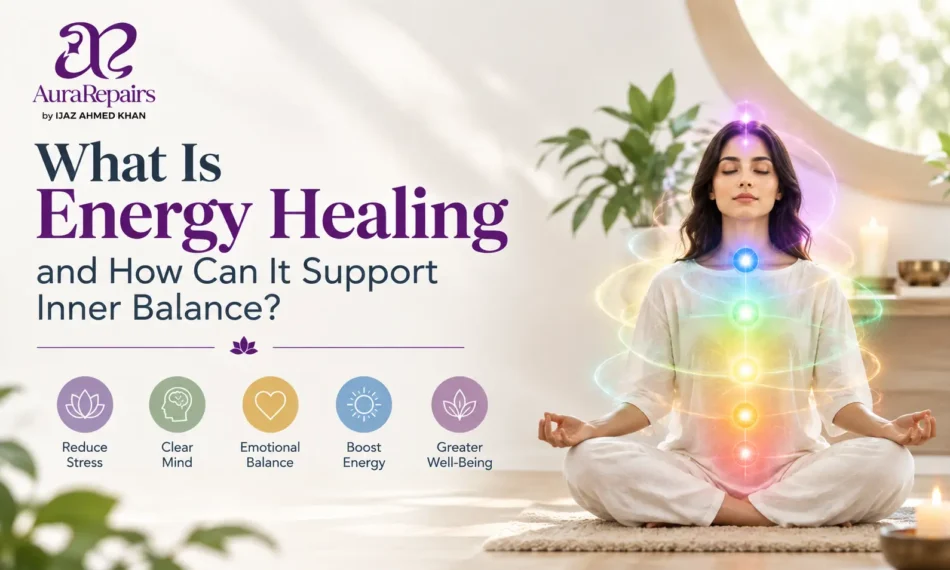
Energy healing is a holistic, spiritual wellness approach that focuses on energy, balance, relaxation, and the connection between mind, body, and spirit. People explore energy healing for many different reasons, including personal growth, emotional well-being, spiritual awareness, relaxation, and a greater sense of inner balance.
The term “energy healing” covers many practices. Reiki, Therapeutic Touch, Healing Touch, spiritual healing, and other forms of energy-based practices may use different techniques and beliefs. Some involve light Touch, while others involve placing the hands near the body or using meditation and visualization.
But what is energy healing, exactly? How does energy healing work? What is the connection between energy and the aura? And can energy healing support inner balance?
This guide explains the concept of energy healing, common types of energy healing, its relationship with aura and spiritual wellness, and practical ways people can explore these approaches.
Energy healing is considered a complementary or spiritual wellness practice. Scientific evidence does not establish the existence of the energy fields proposed by practices such as Reiki, and evidence for health benefits remains mixed. Energy healing should not replace appropriate medical or mental-health treatment.
What Is Energy Healing?
Energy healing is a broad term for complementary and spiritual practices based on the belief that a form of energy flows through or around the human body and that balancing this energy can support well-being.
The terminology varies between traditions. According to the U.S. National Centre for Complementary and Integrative Health (NCCIH), energy healing therapies may involve channelling what practitioners describe as healing energy through the hands to restore normal energy balance.
Common examples include:
- Reiki
- Healing Touch
- Therapeutic Touch
- Spiritual healing
- Biofield therapies
- Energy balancing
- Aura healing
- Chakra-based practices
- Meditation and visualization
Different practitioners may use different methods and explanations.
From a spiritual perspective, energy healing may be viewed as a way of encouraging energetic harmony, emotional balance, spiritual connection, and inner peace.
From a scientific perspective, however, the proposed invisible energy fields have not been established. NCCIH states that no scientific evidence supports the energy field proposed in Reiki.
This distinction is important when discussing energy healing responsibly.
How Does Energy Healing Work?
No single explanation exists for how energy healing “works” because different traditions use different concepts.
Practitioners may describe energy healing in terms of:
- Energy flow
- Energy balance
- Blocked energy
- Aura
- Chakras
- Life-force energy
- Spiritual alignment
- Energetic boundaries
- Inner harmony
During a session, a practitioner may place their hands lightly on or above the body, guide meditation, use visualization, or employ other techniques.
For example, Reiki involves a practitioner placing their hands lightly on or just above a person, intending to direct energy.
Some people report feeling relaxed, calm, emotionally supported, or more reflective following complementary practices. However, these personal experiences do not by themselves establish a specific biological mechanism.
Research into energy healing remains an active area of investigation. A large 2025 scoping review identified hundreds of studies involving different biofield therapies, including Reiki, Therapeutic Touch, Healing Touch, spiritual healing, and remote healing. It highlighted the broad and varied nature of the research base.
What Is the Connection Between Energy Healing and Aura?
Spiritual traditions commonly describe the aura as a subtle energetic field surrounding a person.
In aura-focused practices, practitioners may discuss:
- Aura balance
- Aura cleansing
- Aura healing
- Aura repair
- Energy blocks
- Negative energy
- Energetic protection
- Energy flow
From this perspective, an aura may be considered part of a person’s overall energetic or spiritual environment.
People interested in aura healing and energy healing may therefore explore both approaches as complementary spiritual wellness practices.
However, the aura described in these traditions should not be confused with a medically recognized structure or diagnostic tool. No established scientific method currently confirms the existence of an aura as described in many spiritual practices.
What Does Inner Balance Mean?
Inner balance is a broad concept that can mean different things to different people.
In spiritual wellness, it may mean feeling more connected to yourself, your values, emotions, relationships, and sense of purpose.
Someone seeking inner balance might be experiencing:
- Emotional exhaustion
- Constant stress
- Difficulty relaxing
- Feeling disconnected
- Lack of spiritual clarity
- Personal uncertainty
- A desire for greater peace
- Feeling overwhelmed by everyday responsibilities
Energy healing may provide a structured opportunity to pause and reflect.
For some people, inner balance may come from meditation. For others, it may involve prayer, spiritual reflection, time in nature, mindfulness, or energy-focused practices.
The goal does not necessarily have to be “fixing” something. It can simply be creating time to become more aware of your thoughts, emotions, values, and personal needs.
Can Energy Healing Support Emotional Well-being?
People often explore energy healing for emotional well-being because they want to create space for relaxation and self-reflection.
A session may provide a quiet environment where someone can temporarily step away from work, responsibilities, and everyday distractions.
Possible experiences may include:
- Feeling calmer
- Greater self-awareness
- A sense of relaxation
- Emotional reflection
- Spiritual connection
- Feeling supported
- A greater sense of inner peace
However, these experiences should not be confused with proven treatment for a mental-health condition.
Evidence concerning specific energy-healing practices varies. For example, a systematic review of Reiki research found some evidence suggesting possible effects on certain mental-health symptoms. Still, it concluded that the evidence base remains limited and that more rigorous research is needed.
This means energy healing can be explored as a complementary wellness practice. At the same time, persistent anxiety, depression, trauma, or other mental-health concerns should be addressed with qualified professional care.
What Are the Potential Benefits of Energy Healing?
When people discuss the benefits of energy healing, they may be referring to personal and spiritual experiences rather than established medical effects.
Commonly reported goals include:
Relaxation
A quiet energy-healing session may provide dedicated time away from everyday demands.
Self-Reflection
Spiritual and energy-focused practices can encourage people to reflect on their emotions, values, experiences, and personal direction.
Spiritual Connection
Some people use energy healing as part of a broader spiritual practice.
Sense of Inner Peace
Meditation, guided relaxation, and other complementary practices may help create a calmer environment.
Mind-Body Awareness
Energy healing may encourage people to pay closer attention to how stress, emotions, relationships, and daily habits influence their sense of well-being.
It is important not to present these potential experiences as guaranteed outcomes. Research into energy healing has produced mixed results, and high-quality evidence establishing its effectiveness for specific health conditions is limited.
What Are the Different Types of Energy Healing?
Energy healing is not one single technique.
Reiki
Reiki is a Japanese-origin complementary practice in which practitioners place their hands lightly on or above the body, intending to direct energy.
Healing Touch
Healing Touch is a complementary approach that uses gentle Touch or hands held near the body within an energy-focused framework.
Therapeutic Touch
Therapeutic Touch involves practitioners using their hands over or near the body based on the concept of an energy field.
Spiritual Healing
Spiritual healing is a broader concept that may incorporate prayer, meditation, reflection, spiritual guidance, or energy-based practices depending on the tradition.
Aura Healing
Aura healing focuses specifically on the concept of an individual’s aura or subtle energy field.
Chakra-Based Energy Practices
Some spiritual traditions describe chakras as energy centres and use meditation, visualization, or other practices to promote perceived energetic balance.
These approaches should not be treated as interchangeable. Their philosophies, techniques, and evidence bases differ.
What Happens During an Energy Healing Session?
An energy healing session can vary considerably depending on the practitioner and method.
A typical session may include:
1. Initial conversation
The practitioner may ask why you are seeking energy healing and what you hope to explore.
2. Relaxation
You may be encouraged to sit or lie comfortably and focus on breathing or relaxation.
3. Energy-focused practice
The practitioner may place their hands lightly on or above the body, depending on their approach.
4. Reflection
After the practice, you may discuss your experience and any observations.
5. Personal guidance
Some practitioners may suggest meditation, mindfulness, spiritual reflection, or other complementary practices.
Before booking a session, ask what the practitioner actually does, how long the session lasts, what their approach is, and what you can realistically expect.
Can Energy Healing Help With Stress?
Many people search for energy healing for stress because they want a complementary approach to relaxation and emotional well-being.
Stress management can involve many evidence-based strategies, including physical activity, adequate sleep, social support, relaxation practices, and professional care when necessary. Some mind-body practices such as meditation and mindfulness have also been studied for health and well-being outcomes.
You can explore energy healing alongside these approaches if it aligns with your personal beliefs.
Rather than viewing energy healing as a treatment for stress, consider it as one possible spiritual wellness practice that may provide time for relaxation, reflection, and personal connection.
Energy Healing and Aura Cleansing
Aura cleansing is another common term within spiritual and holistic wellness.
Practitioners may describe aura cleansing as a process intended to clear perceived unwanted or negative energy and promote energetic freshness.
It may involve:
- Meditation
- Visualization
- Prayer
- Breathwork
- Energy-focused practices
- Time in nature
- Spiritual reflection
Some people find these practices personally meaningful because they provide a ritual for letting go of stress or mentally transitioning from one stage of life to another.
From a scientific perspective, however, cleansing an invisible aura has not been established as a measurable medical process.
Can Energy Healing Be Done Online?
Yes. Some practitioners offer online energy healing, remote energy healing, virtual spiritual healing, and online aura sessions.
An online session may include:
- Video consultation
- Discussion of personal concerns
- Spiritual guidance
- Guided meditation
- Visualization
- Aura or energy-focused assessment
- Follow-up recommendations
Remote energy healing is based on spiritual frameworks that do not require the practitioner and client to be physically present in the same location.
Research has investigated distant and remote forms of biofield therapy. Still, the evidence remains varied and does not establish a scientifically validated mechanism for remote energy transmission.
Therefore, approach online energy healing as a spiritual or complementary practice, not a replacement for healthcare.
How Can You Support Inner Balance Every Day?
You do not need to attend an energy healing session to begin developing a greater sense of inner balance.
Try incorporating simple practices into your routine.
Practice Mindful Breathing
Spend a few minutes focusing on slow, comfortable breathing without distractions.
Create Quiet Time
Give yourself time away from phones, social media, and work-related notifications.
Spend Time Outdoors
Walking in nature can provide a simple opportunity to slow down and reconnect with your surroundings.
Reflect on Your Emotions
Instead of ignoring difficult emotions, consider writing down what you are experiencing and what may be contributing to it.
Establish Healthy Boundaries
Protecting your time and energy may mean learning when to say no and setting healthier boundaries around work and relationships.
Explore Spiritual Practices
If spirituality matters to you, meditation, prayer, reflection, or other practices can become part of your wellness routine.
Energy Healing vs Medical Treatment
Understanding the difference between energy healing and medical treatment is important.
Medical care uses established clinical methods to diagnose, treat, prevent, and manage health conditions.
Energy healing, by contrast, is generally considered a complementary or spiritual practice based on concepts of energy and balance.
The National Cancer Institute explains that energy healing is based on beliefs about vital energy flowing through the body, while noting that there is not enough evidence to support the existence of these energy fields.
This does not prevent someone from exploring energy healing for personal or spiritual reasons. It simply means that claims about treating diseases or replacing medical care should be approached cautiously.
A balanced approach lets people explore spiritual well-being while continuing to use appropriate professional healthcare.
How to Choose an Energy Healing Practitioner
If you are considering an energy healing session, research the practitioner carefully.
Consider asking:
- What type of energy healing do you practice?
- What happens during a session?
- Is the session online or in person?
- How long does it take?
- What should I expect?
- What qualifications or training do you have?
- Do you make medical claims about your service?
- How does your approach complement conventional healthcare?
Be cautious of anyone who tells you to stop prescribed medical treatment or guarantees that an energy practice will cure a serious illness.
A responsible complementary wellness practitioner should be clear about the nature and limitations of their service.
Final Thoughts: Energy Healing and Inner Balance
Energy healing is a broad category of spiritual and complementary practices centred on concepts such as energy, balance, relaxation, aura, chakras, and spiritual well-being.
For some people, these practices offer a meaningful way to slow down, reflect, explore spirituality, and focus on inner balance.
At the same time, scientific evidence does not establish the invisible energy fields proposed by practices such as Reiki, and research on specific energy-healing techniques has produced mixed results.
This makes it important to approach energy healing with realistic expectations.
If you are interested in aura healing, energy balancing, spiritual healing, aura cleansing, or other holistic wellness practices, consider them as complementary approaches that can exist alongside healthy lifestyle habits and appropriate professional care.
For those interested in exploring their perceived energy and aura, Aura Diagnostic & Mapping may provide a structured starting point for understanding how an aura-focused practitioner approaches these concepts.


