



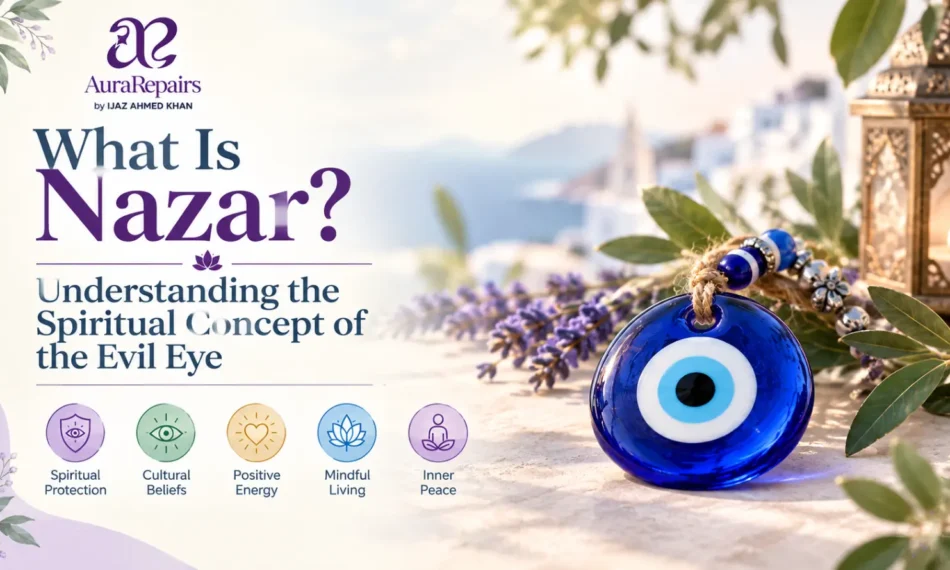
Have you ever heard someone say, “Nazar lag gayi” when a person suddenly experiences difficulties after receiving attention or praise? The concept of nazar, commonly known as the evil eye, has long been part of cultural and spiritual traditions. Many people believe that envy, jealousy, or excessive admiration can bring unwanted effects to another person.
This belief is especially familiar in South Asian communities, including Pakistan and India, but similar ideas exist across the Middle East, the Mediterranean, and other parts of the world. Different communities have developed their own customs, prayers, symbols, and rituals associated with the evil eye.
But what is nazar, exactly? What does the evil eye symbolise, how do people traditionally believe it affects daily life, and what practices are used for spiritual protection?
In this guide, we explore the meaning of nazar, its cultural background, commonly reported signs, traditional protective practices, and ways to maintain emotional balance without letting fear or superstition control everyday life.
What Is Nazar? Understanding Its Spiritual Meaning
Nazar is a term used in several languages, including Urdu, Hindi, Persian, and Arabic, related to looking, sight, or the gaze. In everyday South Asian usage, nazar lagna means believing someone has been affected by the evil eye.
According to this traditional belief, a person’s success, beauty, health, happiness, relationships, or possessions may attract envy or excessive attention. Some people believe this attention can lead to misfortune or a sudden, unexplained change.
Cultures understand the evil eye differently. In some traditions, it is associated with deliberate jealousy or ill will. In others, people believe that even unintentional admiration can attract nazar.
It is important to distinguish between the cultural meaning of nazar and scientifically established explanations. The evil eye is a longstanding spiritual and folkloric belief, but no reliable scientific evidence shows that an envious glance transmits a harmful supernatural force.
For many people, however, nazar remains meaningful as part of their family traditions, religious understanding, and approach to spiritual well-being.
What Is the Origin of the Evil Eye Belief?
The belief in the evil eye has a long and diverse history. Historical accounts document variations of the concept in ancient Mediterranean societies, the Middle East, South Asia, and other regions. Ancient Greek and Roman traditions included beliefs about harmful glances, while other communities developed their own interpretations and protective customs.
Although the details differ, several themes appear repeatedly:
- Envy and jealousy: Good fortune, beauty, wealth, or success may attract unwanted attention.
- Vulnerability: Babies, families, new possessions, and major life events are often seen as needing special protection.
- Protective symbols: Some communities use beads, amulets, or hand-shaped symbols as reminders of protection.
- Prayer and customary practices: Religious supplications and cultural rituals may provide reassurance and a sense of connection.
These traditions reflect how communities have tried to understand uncertainty, misfortune, and interpersonal relationships throughout history. They also show that the meaning of the evil eye depends on a person’s culture, faith, and family background.
What Are the Commonly Reported Signs of Nazar?
People who believe in nazar sometimes associate it with unexpected changes in their personal lives. These interpretations vary, and no scientifically validated checklist can determine whether someone has been affected by the evil eye.
Common experiences that people may interpret as nazar include:
1. Unexpected Feelings of Unease
Some people associate nazar with feeling unsettled, unusually worried, or emotionally drained after receiving significant attention. These feelings can also arise from stress, poor sleep, relationship concerns, or everyday pressures.
2. Sudden Difficulties in Daily Life
A series of setbacks involving work, finances, family responsibilities, or personal plans may lead someone to wonder whether nazar is involved. However, unexpected problems do not prove a supernatural cause.
3. Concerns About Family or Relationships
Some traditions associate the evil eye with disagreements, tension, or changes in family dynamics. In practice, communication difficulties, misunderstandings, and external stressors also matter.
4. Worry About a Child or Loved One
In many communities, parents and relatives traditionally seek protection for babies and children from nazar. Caring for loved ones is understandable, but persistent crying, fever, changes in feeding, or unusual tiredness should be assessed for possible health-related causes.
5. Feeling Overwhelmed After a Major Achievement
A promotion, new business, marriage, or other positive milestone can bring excitement alongside pressure and unwanted attention. Some people interpret the stress that follows through the lens of nazar, while others may benefit from setting boundaries, resting, and seeking practical support.
Remember: These experiences don’t prove the evil eye. You can respect cultural beliefs while also considering ordinary explanations and seeking appropriate professional help when needed.
How Do People Traditionally Protect Themselves From Nazar?
Protection practices from the evil eye differ across religious and cultural traditions. Some people find comfort in prayer, while others use familiar symbols or family customs.
The following are examples of practices associated with nazar protection.
1. Prayer and Spiritual Reflection
For many people, prayer is an important part of feeling spiritually grounded. In Muslim communities, some people recite supplications and Qur’anic passages as part of their religious practice and seek guidance from trusted, knowledgeable religious teachers.
Religious practices should be approached according to one’s own faith and understanding. Anyone with questions about specific prayers or religious rulings can consult a qualified religious authority.
2. The Nazar Amulet and Evil Eye Symbol
The blue eye-shaped bead commonly called a nazar amulet is a familiar symbol in many cultures. People often display it in homes, wear it as jewellery, or give it as a gift.
Some people view it as a protective charm, while others appreciate it mainly as a cultural or decorative object. Its popularity does not prove it has scientifically verified supernatural protective powers.
3. Maintaining Healthy Personal Boundaries
Some people prefer to keep certain achievements, family matters, or personal plans private. Healthy privacy can help reduce unwanted attention and protect personal space.
However, you don’t need to hide every positive experience out of fear of nazar. Sharing happiness with trusted people can be a meaningful part of healthy relationships.
4. Creating a Calm Home Environment
A clean, comfortable, and peaceful home can support relaxation and emotional well-being. People may incorporate prayer, quiet reflection, meaningful objects, or familiar cultural traditions into their living spaces.
These activities can serve as personal rituals, even when their supernatural effects are not established.
5. Seeking Trusted Guidance
When concerns about nazar become upsetting, it may help to speak with a trusted family member, religious adviser, or qualified mental health professional. A supportive conversation can help separate cultural concerns from practical problems and identify constructive next steps.
Avoid anyone who uses fear of the evil eye to threaten you, demand large sums of money, or pressure you into harmful practices.
What Is Nazar Utarna? Understanding Traditional Evil Eye Removal
In Pakistan and India, the phrase “nazar utarna” refers to traditional practices intended to remove or counter the perceived effects of the evil eye.
The customs vary between families and communities. Some involve prayer or religious recitation, while others involve symbolic gestures or household traditions. Anthropological research on nazar in Pakistani society has also examined how these customs can reflect cultural identity, social relationships, and people’s search for reassurance. Research on the cultural enactment of evil eye in Pakistani society
People may find familiar rituals comforting because they connect them with family, faith, and community. Nevertheless, a ritual should not replace medical assessment, practical problem-solving, or professional support when these are needed.
If you choose to follow a cultural or spiritual practice, make sure it is safe, voluntary, and consistent with your beliefs. Avoid practices involving physical harm, dangerous substances, frightening threats, or stopping prescribed treatment.
Nazar in Islam: Understanding Faith and Spiritual Protection
For many Muslims, discussions about nazar are connected with religious belief and spiritual protection. People may turn to prayer, Qur’anic recitation, and established supplications for reassurance and guidance.
Religious interpretations and individual practices vary, so consult trusted Islamic scholarship for specific questions about the evil eye, permissible protective practices, and religious obligations.
It is also important not to accuse someone of causing nazar simply because they offered a compliment or were present before an unfortunate event. Such assumptions can damage relationships and create unnecessary suspicion.
A balanced approach can include faith, gratitude, compassion, and practical responsibility. Spiritual belief does not require treating every illness, disagreement, financial setback, or period of anxiety as evidence of supernatural harm.
How Can You Support Your Spiritual and Emotional Well-Being?
Whether you believe in nazar or want to feel more grounded, practical ways can support your well-being.
Practise Mindful Reflection
Set aside a few minutes each day for quiet reflection, prayer, or mindful breathing. These practices may help you slow down, notice your emotions, and respond more thoughtfully to stressful situations.
Focus on What You Can Control
If you are facing difficulties, identify practical steps you can take. These may include improving communication, organising finances, getting enough rest, seeking advice, or making a plan to address a specific challenge.
Build Supportive Relationships
Spend time with people who respect your boundaries, celebrate your achievements, and offer constructive support. Strong relationships can help you feel connected and better equipped to manage everyday challenges.
Avoid Excessive Fear
Constantly searching for signs of nazar can increase worry and make ordinary setbacks feel threatening. Try to evaluate situations calmly and consider several possible explanations before concluding.
If fears about the evil eye begin to interfere with sleep, relationships, work, or daily activities, speaking with a qualified mental health professional may be helpful.
Explore Spiritual Practices Responsibly
Some people find meaning in spiritual reflection, religious guidance, or complementary wellness practices. These can be part of a personal well-being routine, as long as they aren’t presented as guaranteed ways to remove supernatural forces or as replacements for appropriate healthcare.
At AuraRepairs, spiritual well-being can be explored as a personal and reflective practice, with an emphasis on emotional balance, self-awareness, and responsible support.
Can Nazar Affect Your Life? A Balanced Perspective
The concept of nazar carries strong cultural and personal meaning. It may influence how people interpret praise, success, family traditions, and unexpected difficulties.
However, believing that nazar explains every negative experience can make it harder to recognise practical causes or take useful action. For example, exhaustion may be related to sleep problems or stress; relationship difficulties may require honest communication; and persistent physical symptoms may need medical attention.
You do not have to dismiss your cultural background to take a balanced approach. You can respect family traditions, practice your faith, and find comfort in meaningful rituals while staying open to evidence-based explanations.
The most helpful approach supports peace of mind rather than increasing fear, blame, or suspicion.
Final Thoughts: Understanding Nazar Without Fear
So, what is nazar? It is a longstanding cultural and spiritual concept, commonly associated with the belief that envy or excessive admiration can bring harm or misfortune. Across communities, people have developed traditions involving prayer, protective symbols, and other practices to address this concern.
Although the evil eye holds deep cultural significance, science has not established its supernatural effects. Experiences commonly attributed to nazar may have many different explanations, and it is important to consider practical, emotional, and health-related factors when appropriate.
By approaching the subject with cultural awareness, personal reflection, and common sense, you can honour meaningful traditions without allowing fear to shape your decisions. Spiritual practices may offer comfort and connection, while healthy boundaries, supportive relationships, and appropriate professional guidance can help you navigate life’s challenges.


